Someone just typed “gluten free lasagna for a crowd” into Pinterest. They are not there to see anyone’s vacation photos. They want the problem solved in the next twenty minutes. So when people ask me, is Pinterest social media, that search bar is my answer.
That is a search, and it behaves like one.
This is for you if you run a real business and keep hearing Pinterest could work for you. Something about it has never clicked yet.
By the end you will know what Pinterest actually is. You will also know the six myths that keep smart owners stuck, and the three things to fix first.
Is Pinterest social media?
No. Pinterest is a visual search engine. People arrive with a question already in mind, type it into a search bar, and save what solves it. Following, commenting and liking exist, and almost nobody uses them. The behavior that drives Pinterest is search intent, which makes it closer to Google than to Instagram.
What Pinterest is actually built to do
Around 96% of searches on Pinterest are unbranded. People type what they need, not who they want to buy it from. That is a room full of buyers with no favorite brand yet.
The scale is real too. Pinterest reported 640 million monthly users in its second-quarter results this August, an eleventh straight quarter of double-digit user growth.
Search behavior keeps shifting toward visual, too. In research Pinterest published on visual search, 36% of people said they now start searches on Pinterest instead of a traditional search engine. Another 73% said the visual results beat what they get from text search.
Your move: open Pinterest, type the exact phrase your customer would type, and look at the top ten results. That is your competition, and that is your opening.
Pinterest and social media, side by side
Here is the difference in one look.
| Social platforms | ||
|---|---|---|
| How people arrive | Scrolling a feed | Typing a search |
| What they want | Entertainment, connection | A solution they can act on |
| Content shelf life | 24 to 48 hours | Months, often years |
| What ranks it | Engagement and recency | Keyword match, saves, click quality |
| Mindset | Browsing | Planning a purchase |
| What you build | A posting schedule | An evergreen library |
1. “Pinterest won’t work for my niche”
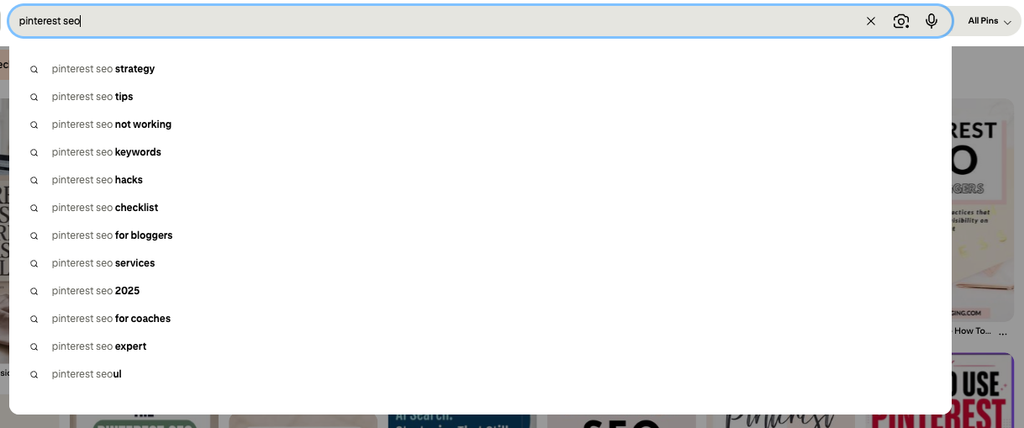
This one has a five-minute test. Search your main keyword on Pinterest and count the results.
If people are searching it, your niche is there. Roofing, B2B software and bookkeeping keywords all pull real search volume. Their owners swore Pinterest was only for weddings.
Your move: search three of your keywords right now. Screenshot the results. That is your proof.
2. “Pinterest is social media, so I have to post daily”
Daily posting is a social media rule. It exists because feeds forget you fast.
Pinterest works on a library model. A pin you make today can rank, get found and send traffic eight months from now. Consistency still matters, and volume for the sake of volume does not.
Your move: trade the daily-post habit for a keyword list. Ten strong keywords beat thirty rushed pins.
3. “Pinterest is only for women”
The audience shifted years ago and most people missed it. Men and Gen Z are now among the fastest-growing groups on the platform.
More to the point, search intent has no gender. Somebody looking for “warehouse shelving layout” is a buyer, full stop.
Your move: check your own Pinterest analytics under Audience insights. Look at the real numbers before you rule anybody out.
4. “I don’t have enough content”
Most business owners are sitting on more than they think. Every blog post, product page, service page, freebie, testimonial and FAQ can become a pin.
One blog post can carry six to ten pins with different images, titles and keyword angles. Nothing about that is duplicate content on Pinterest.
Your move: list your ten best URLs. That is sixty pins of raw material.
5. “Pinterest is full of AI images now, so it’s over”
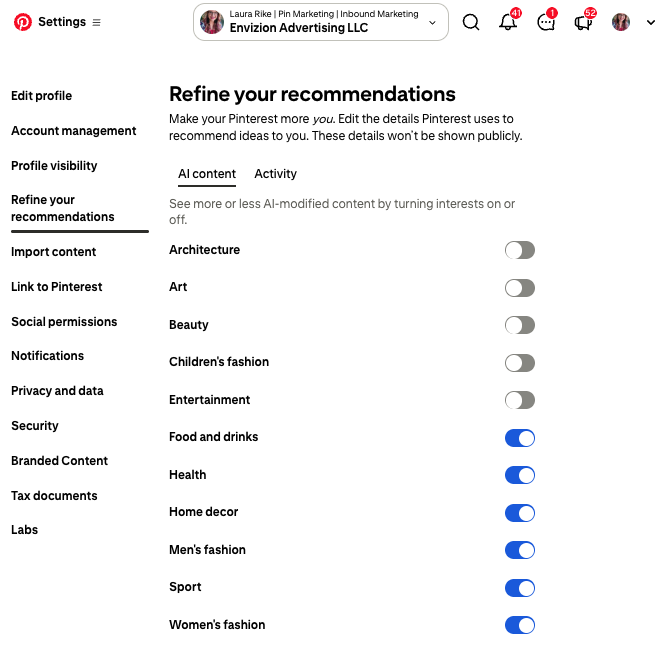
Pinterest is leaning hard into AI on the ads and discovery side. In June it rolled out a Business Assistant inside Ads Manager and an experimental conversational shopping tool called Ask Pinterest.
None of that removes the need for real, useful, human answers. Search engines still have to return something worth clicking, and thin AI filler does not hold a saver’s attention.
Your move: make your pins point to pages that actually answer the search. The click-through and the save are what Pinterest measures.
6. “I tried Pinterest and it didn’t work”
Usually the strategy was social media strategy wearing a Pinterest costume. Pretty images, no keywords, a posting calendar, and a quiet three weeks before giving up.
Pinterest compounds. Month three looks like movement, month six looks like traffic, month twelve looks like a channel. One ecommerce client of mine saw a 433% blog traffic increase. Another added 141% more leads once the keyword structure was fixed.
Your move: give it two quarters with a real keyword plan before you judge it. If you would rather hand that to someone, my team runs it inside Pinterest management.
How to treat Pinterest like the search engine it is
Three things, in order.
- Build a keyword list before you build a single pin. Use Pinterest’s own search bar and the Trends tool. Write down what your buyer types.
- Name your boards and write your pin descriptions in those exact words. Pinterest reads text to decide what your pin is about.
- Send every pin to a page that finishes the job. A pin that ranks and lands on a dead page teaches Pinterest to stop showing it.
Questions people ask about this
Is Pinterest a social media platform or a search engine?
Pinterest is best understood as a visual search engine. It has a few social features, and the behavior that drives results is search. People type a query, scan images, and save what solves their problem.
Why does Pinterest get grouped with social media?
It launched in the same era, it lives in the same app folder, and it has profiles and followers. Marketing teams put it on the social calendar out of habit, then measure it with social metrics that do not fit.
Do followers matter on Pinterest?
Very little. Pinterest distributes pins based on how well they match a search, not on how many followers an account has. New accounts can rank against old ones.
How long does a pin last?
Months, and often years. A pin that matches a search keeps getting surfaced long after you made it. That is why Pinterest builds an evergreen library instead of a feed.
How long before Pinterest sends real traffic?
Plan on 90 to 180 days for meaningful movement with a proper keyword structure. Anyone promising leads next week is selling something Pinterest does not do.
Your next three steps
- Search three of your customer’s real phrases on Pinterest and screenshot what comes back.
- Write ten keywords into a doc. Those become your boards and your pin copy.
- Pick your ten best pages and plan six pins each.
You came here because something told you Pinterest belonged in your business. The social media framing kept getting in the way. Search intent is the whole difference, and you can learn it in an afternoon.
My entire Pinterest career has been spent inside the analytics. Grab a 20-minute pin chat and we will map what this looks like for your business.


