This post contains affiliate links, and Amazon associate links which means I may earn a commission at no extra cost to you if you buy through them, and it may also include links to my own paid digital products. I use AI tools to help with drafting and editing; however, every post is reviewed, fact-checked, and approved by me before publication, and all client results and numbers are real.
One potato salad pin sent 3,587 clicks to Erin’s gluten-free recipe blog in 30 days. A potato salad! Nothing fancy either. Creamy, easy, the kind you carry to a cookout in a big plastic bowl. That number came straight out of her Pinterest analytics, and I love it for one reason. It shows exactly which pin did the work, so everyone knows what to make more of next month. When you hire a Pinterest manager, that kind of clarity is what you should expect before you ever sign anything.
This guide is for business owners who already sell something that works. Online shops, bloggers, coaches, and course creators all fit. You want Pinterest to bring in more of the right people, and you’d love for someone else to run it.
By the end, you’ll know how to compare prices, what a good report looks like, how long results take, which numbers to track, and the red flags that mean keep looking.
My son went through a rough stretch in baseball with a coach who wasn’t a good fit, and he lost his confidence at the plate. Then he got a coach who broke his swing down piece by piece. Now he’s one of the better hitters on the team.
Same kid. Same bat.
Different coach.
That’s what Pinterest looks like for a lot of the business owners I talk to. They tried it, it fizzled, and they decided Pinterest just wasn’t for them. Pinterest didn’t fail you. The strategy did.
So picking the right coach is the whole ballgame.
What a Pinterest management service should do for you
A Pinterest management service runs your Pinterest for you. That usually means keyword research, pin design, publishing new pins every week, monthly reports, and sometimes ads. The goal is steady traffic, leads, and sales from people searching for what you sell. A good one treats Pinterest like a search engine, so your pins keep working for months.
If you want every piece of the service broken down, I wrote a whole post on what Pinterest management really includes. This one is about picking the right person to do it.
1. Compare Pinterest management pricing the smart way
Prices are all over the place.
Published price guides put freelancers and Pinterest VAs (virtual assistants) at roughly $300 to $800 a month. Full-service agencies often land around $1,000 to $3,000 a month, and some charge even more.
Here are the pricing models you’ll run into most:
- A monthly retainer, which is one flat fee for a set list of work each month. This is the most common setup.
- A pin package, where you pay for a certain number of pins each month.
- An hourly rate, where you pay for time. This one is harder to predict.
- A one-time setup or audit, which fixes your profile, boards, and keywords before monthly work starts.
- Ads management, which is usually a separate fee on top of your ad budget. Price guides list it at roughly $300 to $1,000 a month, and some agencies charge a percentage of what you spend on ads instead.
A huge pin count looks great on a proposal. But ten pins built on the right keywords can outwork fifty pins that nobody is searching for. Precision outperforms volume.
Ask every manager to list what’s included in the price, line by line, and what it would cost to add ads later.
2. Ask for real results when you are ready to hire a pinterest manager
Reporting is where you find out if you’re hiring a strategist or someone who just hits publish.
A good monthly report shows the numbers. It explains what they mean in plain English. And then it tells you what’s changing next month because of them… because numbers with no plan attached are just a very pretty spreadsheet.
Pinterest’s numbers and your Google Analytics numbers almost never match perfectly. That’s normal. A good manager checks both and tells you why they’re different.
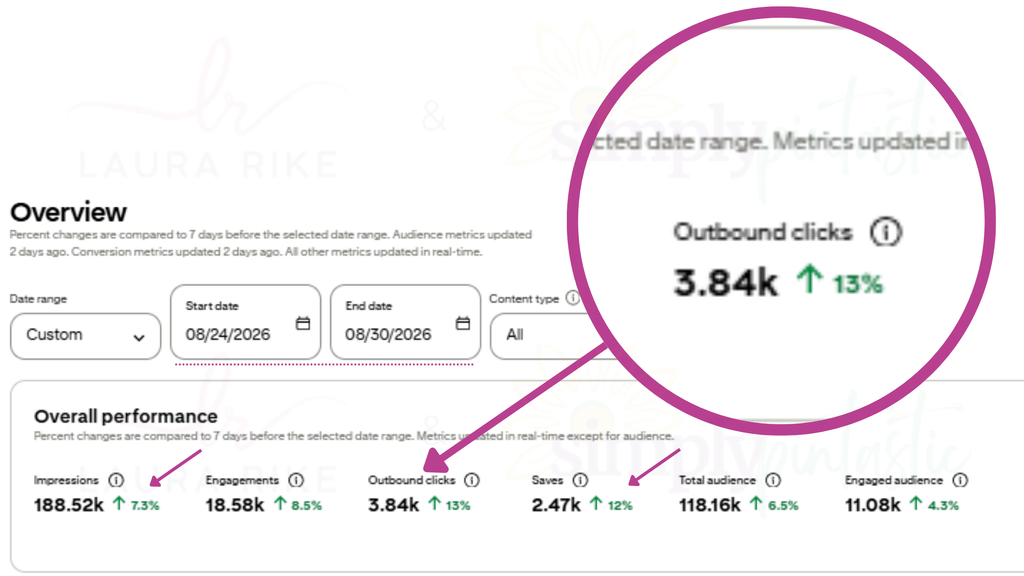
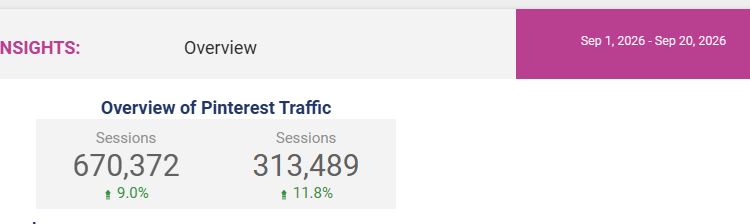
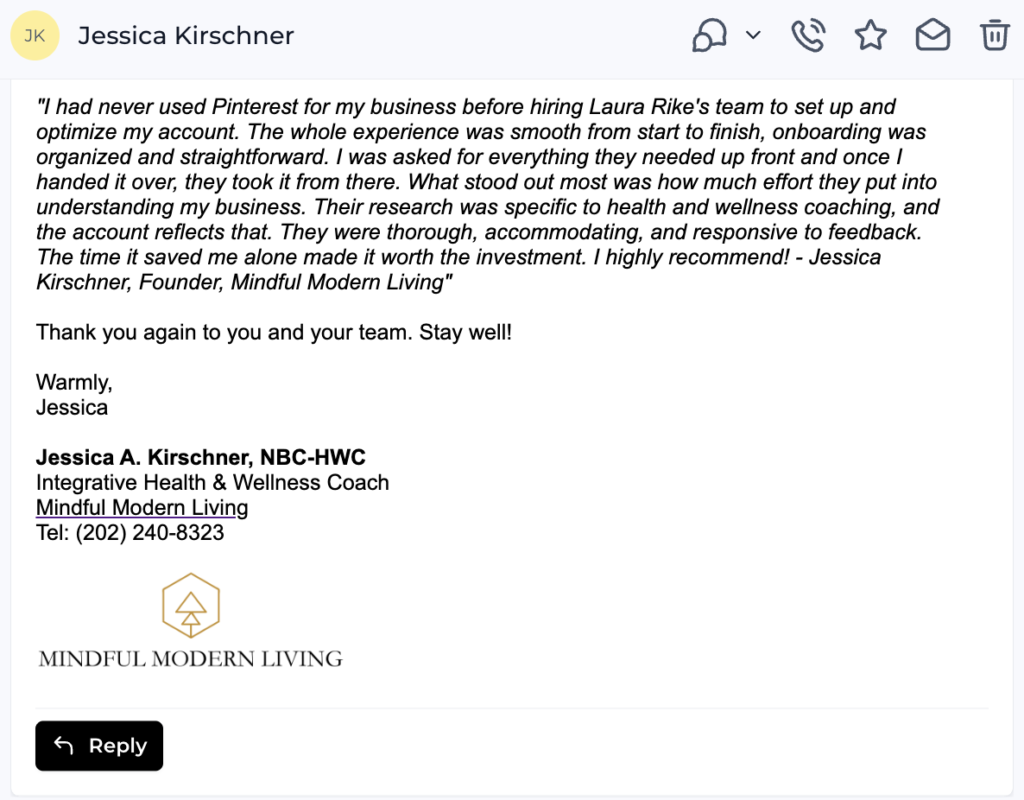
Real results matter too. When people ask me for proof, I point to results like a 67% revenue increase from organic Pinterest alone and 433% growth in blog traffic.
Ask for a real sample report with the client’s name blurred out.
3. Get a realistic timeline in writing
Pinterest builds over time. Most businesses see early movement in the first couple of months, and results stack up around the 90 to 180 day mark. That’s because pins keep getting found in search long after they go live. A good manager will tell you this up front.
A good hitting coach doesn’t promise a home run at the first practice either. The first few weeks are all stance and grip, and the hits come later.
Here’s what a healthy plan usually looks like:
- Month 1: setup. Keywords, boards, profile, pin templates, and the first round of pins.
- Months 2 to 3: steady publishing. Impressions (how many times your pins show up) start to climb, and early clicks show up.
- Months 3 to 6: patterns appear. Your winning pins get more pins, and clicks and sign-ups build.
- Month 6 and beyond: your library of pins keeps stacking up, and older pins keep sending traffic.
If someone promises big sales in 30 days, keep looking.
Ask the manager to write out what months 1, 3, and 6 should look like for your business.
4. Agree on the KPIs that actually matter before you hire a pinterest manager
KPIs (key performance indicators) are just the handful of numbers you agree to watch together.
These are the ones I care about most:
- Outbound clicks (and outbound click rate) which is how many people left Pinterest to visit your website. This is the big one that matters the most out of the analytics that Pinterest provides. Keep an eye on it with also checking it against your Website sessions from Pinterest, checked in Google Analytics.
- Saves, which is people keeping your pin for later. Saves help Pinterest show that pin to more people.
- Leads, which is where you ‘own’ your Pinterest audience. My fav platforms are Kit and GHL, but it could be anything you use to grow and own your email lists.
- Your money number, which could be sales, email sign-ups, or ad revenue, depending on your business.
Follower count matters a lot less than most people think, because people mostly find pins through search. Pick your one money number and make sure every single report tracks it.
5. Test whether they treat Pinterest like a search engine
Ask one simple thing: “How do you pick keywords for my business?”
Listen for words like search, keywords, and what your buyers are typing. Those are good signs.
If you mostly hear “going viral” and “engagement,” that’s a social media plan wearing a Pinterest costume.
Write down how each manager answers this one, word for word. It tells you a LOT.
6. Find out who actually does the work
Some owners want every bit of Pinterest off their plate. Others already have a VA or a small team who could run it with the right plan. Both can work great.
Ask who picks your keywords, who designs your pins, and who you talk to when you have a question. Some services, mine included, can also build the strategy and train your team to run it.
Make sure there’s a real person on the other end who knows your business by name.
7. Watch for these red flags
Keep looking if you see any of these:
- Promises of viral pins or overnight sales.
- No sample report, or a report with numbers and no explanation.
- Zero talk about keywords or search.
- Every pin linking to your homepage, instead of the exact page that answers the search.
- A long contract with no check-in points along the way.
- Unclear answers about what you keep, like your pin templates and images, if you part ways.
What this looks like for an online shop
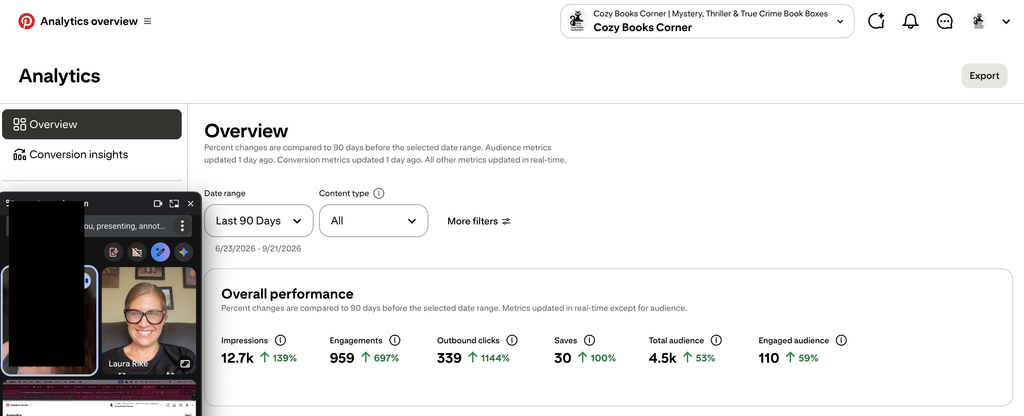
Katy runs Cozy Books Corner, a subscription box for true crime and mystery readers. She sells books, merch, and gifts for true crime fans. Her offers already sold. Her customers already trusted her. But fewer new people were finding the shop, and Instagram had stopped sending many clicks.
So I mapped out a Pinterest profile built to be found in search, branded pin templates, and simple weekly steps her VA could run. Then the content she already had got turned into pins that matched what book lovers search for, with every pin pointed at an offer.
In 90 days, her website traffic grew 516%, and Pinterest started bringing in subscription sales. Katy called it “the first time a marketing platform actually felt sustainable.”
For a shop, the KPIs to watch are outbound clicks to product pages and sales that came from Pinterest.
What this looks like for a food blog
For a food blogger who earns from ads, traffic is the paycheck. More visits means more money.
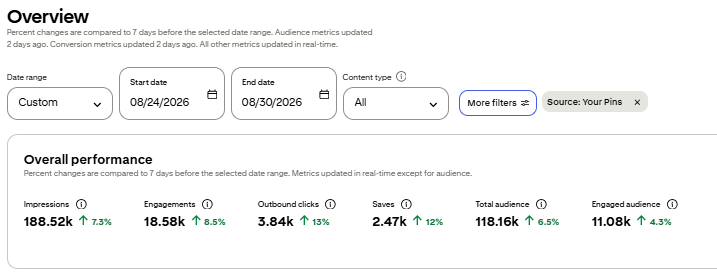
Erin runs Meaningful Eats, where every recipe is gluten-free. Here’s how one 30-day stretch compared to the 30 days before it. Outbound clicks to her site climbed 53%, to 19,890. Saves jumped 83%.
That potato salad pin alone sent 3,587 of those clicks, which is almost 1 in 5 of her Pinterest clicks that month.
And the part I love most is the floor. In early May, her daily clicks bounced around between 270 and 500, and after a big jump in late May, her daily floor settled at around 600 to 800 clicks a day instead of sliding back down, because strong pins in search keep getting shown to new people who are hungry for exactly that recipe.
The timing helped, too. That potato salad went out right as cookout season was heating up. For a food blog, the KPIs to watch are outbound clicks, sessions, and your monthly ad revenue.
Questions to ask before you hire a Pinterest manager
Bring this list to every call:
- What will you do in the first 30 days?
- How do you choose keywords for my business?
- Can I see a sample monthly report?
- Which numbers will you track, and how do they connect to my sales or sign-ups?
- What should months 1, 3, and 6 look like for me?
- Who designs my pins, and who do I talk to?
- Is ads management included, or is it extra?
- What do I keep if we stop working together?
The right manager will love these questions. The wrong one will get squirmy.
Your next 3 steps
- Write down your one money number: sales, sign-ups, or ad revenue.
- Ask every manager on your list the questions above.
- Compare their answers side by side, and choose the one who explains things so clearly that you could explain them back.
You’ve already built something people want to buy. The right Pinterest manager makes sure the people searching for it can find it, month after month.
Your buyers are already typing their problems into Pinterest. It’s a search engine, and the right coach makes sure your pins are the answer they land on.
If you’d like to see how my team and I would run it for you, take a look at my Pinterest management service. Or book a free 20-minute Pin Chat. We’ll look at where Pinterest fits your business and what your first 90 days could look like.
And if the pin that changes everything for you turns out to be a potato salad, I will not be surprised. I’ll just be hungry.


