Pinterest says 96% of its top searches are unbranded. That means people type the thing they want, like “cozy fall porch ideas” or “easy weeknight dinners for kids.” The store name shows up later, if it shows up at all. So when a new client tells me their Pinterest plan is “get our name out there,” I smile, I nod, and I very lovingly take the steering wheel.
Your brand matters a lot on Pinterest.
It just has a different job than most people expect, and good Pinterest search optimization gives it the right one.
This post is for you if you run an established business with a brand you’re proud of, and you want Pinterest to bring you buyers without turning your look into beige mush. By the end, you’ll know where your brand goes on Pinterest, where search words go, and how my team balances the two for our management clients.
What does unbranded search on Pinterest mean?
Unbranded search on Pinterest means someone searches for an idea, a problem, or a type of product instead of a company name. Think “small bathroom storage ideas” instead of a store name. Pinterest reports that 96% of its top searches are unbranded. So most people searching on Pinterest haven’t picked a brand yet. They’re still shopping for ideas.
And that is GOOD news for you.
It means a shopper who has never heard of you can still find you tomorrow.
The famous brand in your space doesn’t get a head start just for being famous. You both begin at the same search bar, with the same shopper, typing the same words.
Pinterest search optimization, in plain English
Pinterest search optimization is the work of matching your pins to the words people type into Pinterest’s search bar. It covers pin titles, descriptions, the words on your pin image, board names, and alt text (a short written description of the image). Pinterest’s own creator guide says to work keywords into titles, descriptions, image names and alt text.
Notice what’s missing from that list… your logo.
Your brand still has a spot. It’s just a different spot.
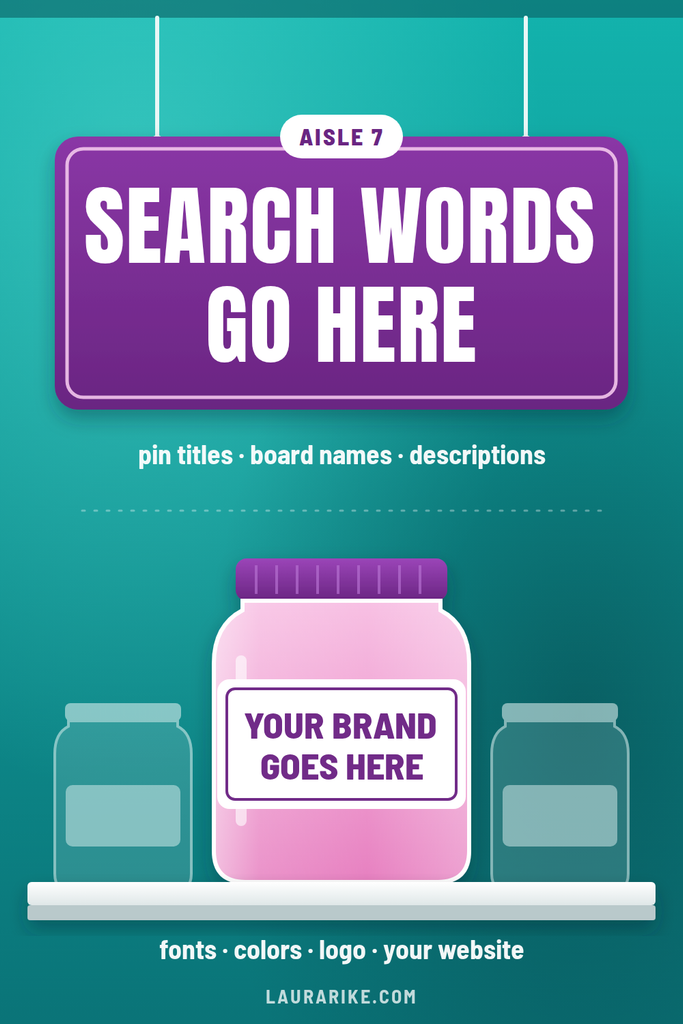
Your brand is the label on the jar
Picture the peanut butter aisle at the grocery store.
Nobody walks into the store looking for your jar. They walk in looking for peanut butter, and the big sign hanging over the aisle is what gets them standing in the right spot.
Then they look at the shelf. That’s where your label goes to work. The colors, the logo, the little jar that just feels like “yep, that one’s me.”
That’s what Pinterest looks like for most people.
The search words are the aisle sign. Your brand is the label on the jar. You need both, and each one has its own place on the shelf.
A lot of the brands I meet have hung their label where the aisle sign should be. So the sign says “The Juniper Collection,” and the shopper looking for “linen tablecloths for fall” walks right past it on the way to somebody else’s jar.
How my team balances your brand and Pinterest search
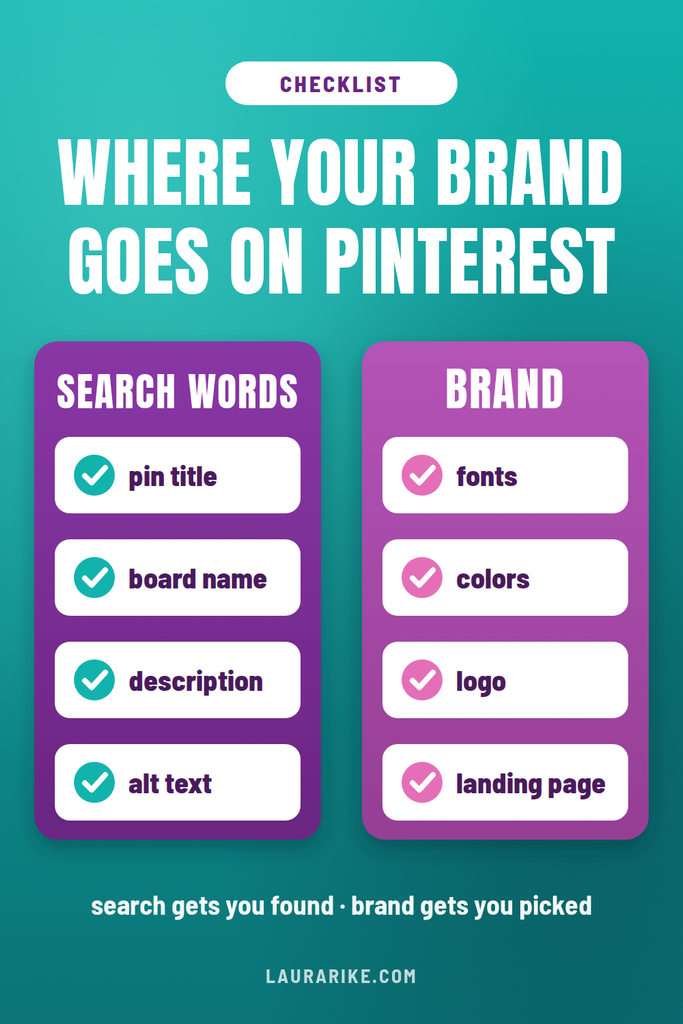
This is the exact split we use for management clients. Five spots, and each one has a clear owner: search or brand.
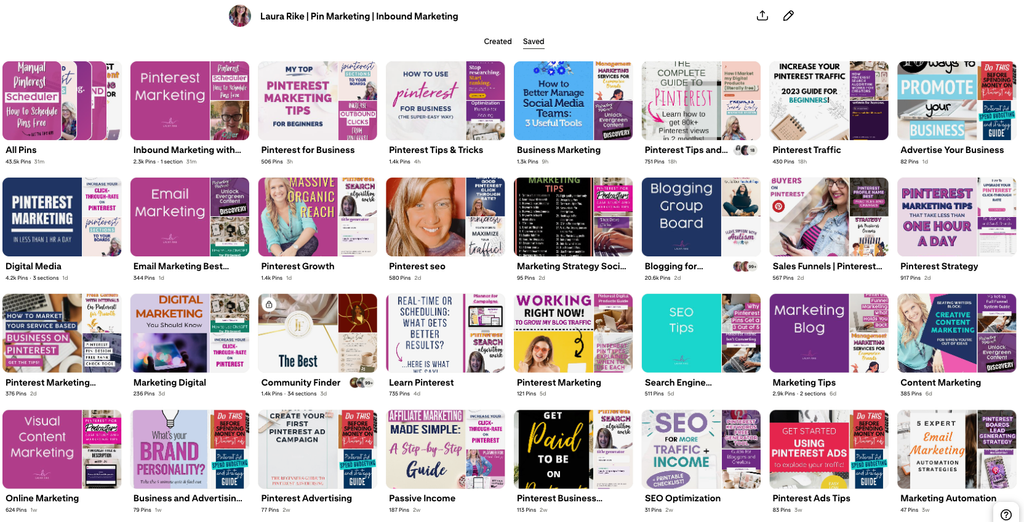
1. Pin titles follow the searcher
The pin title is your aisle sign, so it uses the words your buyer types.
If you sell handmade candles, a strong title reads something like “Fall candle scents for a cozy living room.” The name of your fall collection can live lower down in the description, where it adds flavor without blocking the sign.
Try this: open your last 10 pins and count how many titles start with your brand or product name. Those are your first rewrites.
2. Your brand look lives on the pin design
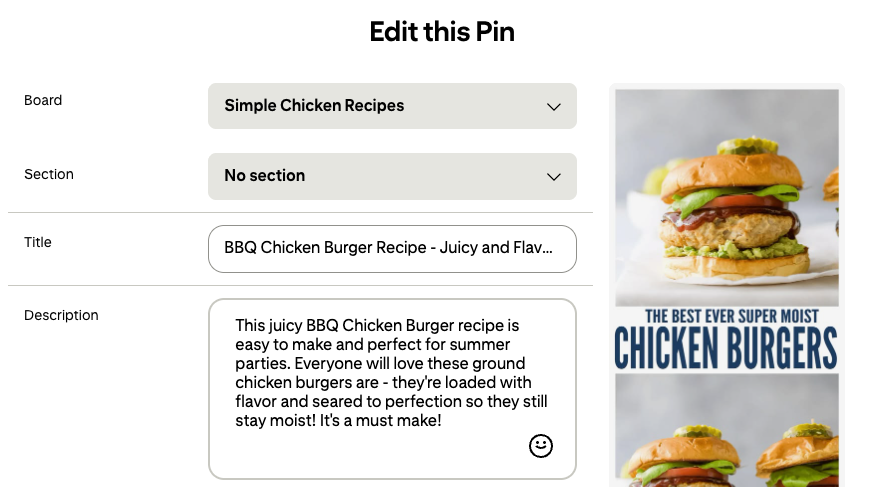
Fonts, colors, and your logo go right on the pin image.
This is where people learn to spot you. When your style shows up again and again in their search results, they can start to recognize you before they read a single word.
Keep the logo small and tidy, tucked in a corner. The big words on the image should still match the search.
Your move: build one pin template with your brand fonts and colors, plus a big, clear spot for a search-friendly headline.
3. Boards get named for what people search
A board name is a tiny aisle sign of its own.
“The Bloom Drop” means a lot to your team. To a stranger typing “spring outfit ideas,” it means nothing at all.
So we name boards the way shoppers search. Your product names can go inside the board description, where they help without getting in the way.
Do this today: rename one board today using a phrase you’d actually type into the search bar yourself.
4. Your website does the brand selling
The click is where your brand takes over.
Pinterest brings the shopper to your door with search words. Then your landing page (the page on your site that the pin sends people to) greets them with your story, your voice, your photos, and your reviews.
Once they land, go ahead and brand your heart out!
Quick homework: check that every pin links to a page that matches the promise in the pin title. If the pin says “cozy fall candle scents,” the page should show cozy fall candle scents, front and center.
5. The words get checked before they get picked
Guessing is how good brands end up with pins nobody finds.
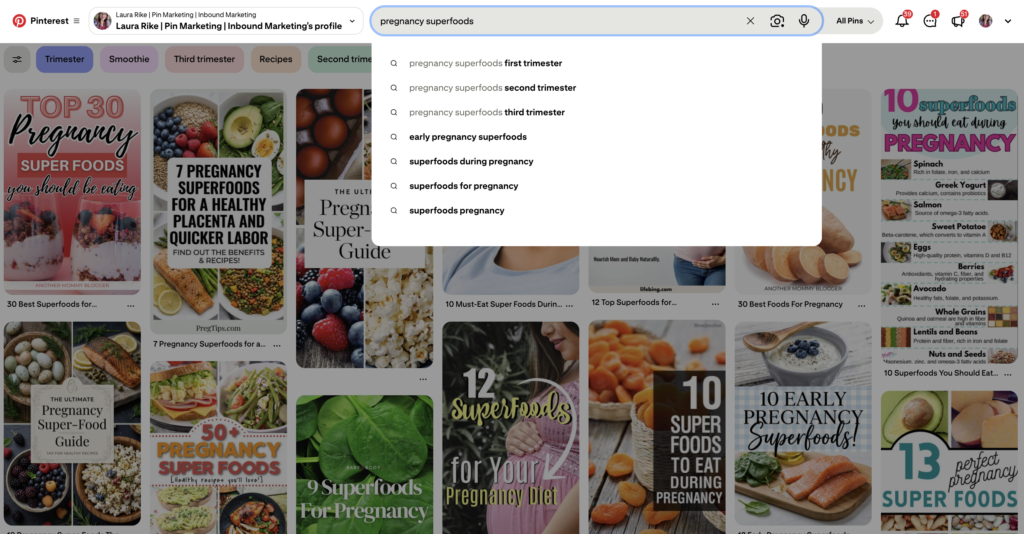
My team looks at what people really type. Pinterest Trends (trends.pinterest.com) is a free tool that shows how searches rise and fall over the year. The Pinterest search bar helps too, because the suggestions that drop down as you type come from what people search.
Your turn: type your main product into Pinterest search and write down the first five suggestions. That’s your starter keyword list.
Four things founders tell me on day one
These come up on almost every kickoff call. And every one of them makes total sense if you’ve spent years building a brand on Instagram or with a design agency.
“People need to know our name.”
They will.
On Pinterest, people get to know your name by finding you over and over. The more searches your pins show up for, the more times people see your look, and your look is what they start to remember. Search is how the name gets known.
“It won’t look on-brand.”
The design stays yours, 100%.
Search words change what the title says. Your colors, your fonts, your photos, and your whole vibe stay right where they are. Actually, one clear template tends to make a Pinterest profile look MORE like you, because every pin finally matches.
“Our product names are keywords.”
Sometimes that’s true, and when people really do type a product name, we use it. Most of the time, though, a collection name is something your team created with a lot of love, and a stranger on Pinterest has simply never heard it yet.
So the collection name goes in the description. The search phrase goes in the title.
“Big brands will win anyway.”
This one is my favorite.
With 96% of top searches unbranded, the giant brand and your brand start at the same search bar. Pinterest wants to show the pin that best matches what someone typed. A smaller business with clear, helpful pins can sit right next to a household name in those results, and that’s the part of this platform I love most.
What this looks like when it works
Pinterest takes a few months to warm up. Then it keeps working long after you pin, which is a very different feeling from a post that disappears in a day.
When the aisle signs are right, the same pin can keep getting found by new people month after month, your brand look gets seen by more and more of the right shoppers, and you get to stop wondering whether anyone out there is actually looking for what you sell, because the searches are sitting right there in front of you.
Pin it once, get found for a long, long time.
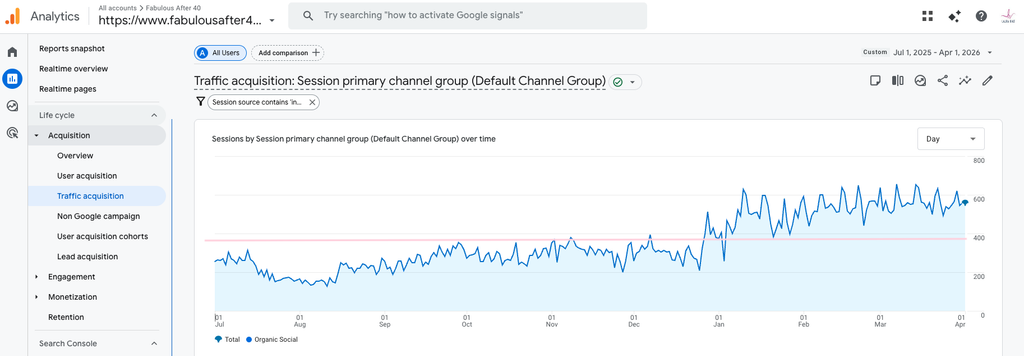
Two numbers I’m proud of from real client work: a 67% revenue increase from organic Pinterest alone, and a 141% increase in leads.
Neither of those came from making the logo bigger.
Your next 3 steps
Start with these three:
- Pull up your last 10 pin titles and circle any that start with your brand or product name.
- Type your main product into Pinterest search and save the first five suggestions.
- Rewrite three titles and rename one board using those words. Keep your fonts, colors, and logo exactly as they are.
Your brand already works. These steps just move it into the aisle where your buyers are already standing.
If you’d rather have a team handle that balance for you, it’s exactly what my Pinterest management services are built for. We keep your brand looking like you, and we keep your pins showing up where people search.
Pinterest is a search engine, and your brand is the label on the jar. The fun part is getting that jar into the right aisle.
Grab a free 20-minute Pin Chat and bring your pickiest brand question. I’ll show you where your name fits and which search words your buyers are already typing.
Fair warning, I will probably ask to see your board names first. I can’t help it.
What is unbranded search on Pinterest?
Unbranded search on Pinterest is when someone searches for an idea or product type instead of a company name, like “fall porch decor” instead of a store. Pinterest reports that 96% of its top searches are unbranded, so most people on Pinterest are open to finding brands they haven’t heard of yet.
Should I put my brand name in my Pinterest pin titles?
Usually not at the front. Pin titles work best when they use the words your buyer types into Pinterest search. Your brand shows up in the pin design through your fonts, colors, and a small logo, and your product or collection names can go lower in the description.
Can a small business compete with big brands on Pinterest?
Yes. Because 96% of top Pinterest searches are unbranded, a big brand and a small business start from the same search bar. Pinterest shows pins that match what someone typed, so clear, search-friendly pins from a smaller brand can appear right next to household names.


