This post contains affiliate links, and Amazon associate links which means I may earn a commission at no extra cost to you if you buy through them, and it may also include links to my own paid digital products. I use AI tools to help with drafting and editing; however, every post is reviewed, fact-checked, and approved by me before publication, and all client results and numbers are real.
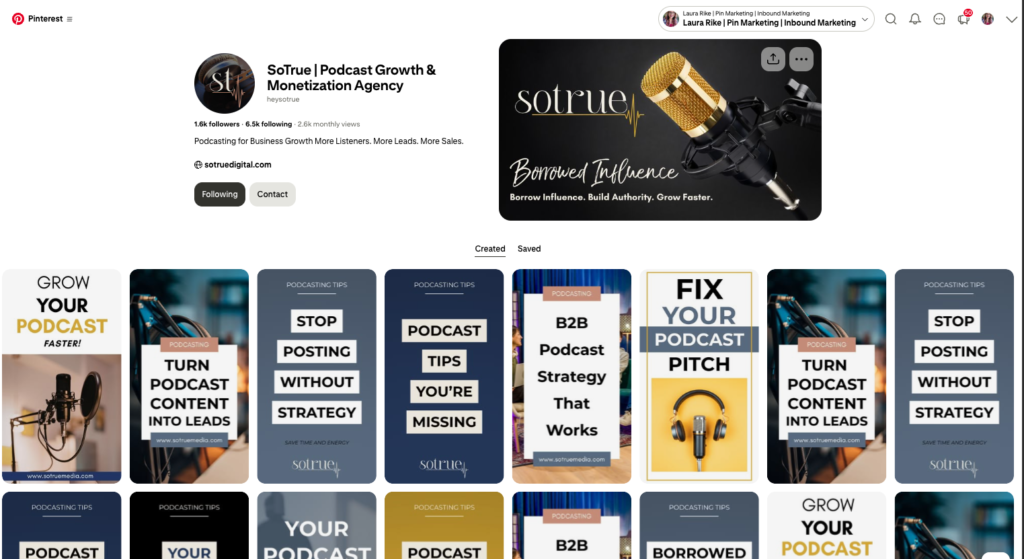
Amy Hartmann never wanted to be a “post five times a day or disappear” kind of business owner.
She runs SoTrue Media, a podcast growth and monetization agency, and she’s brilliant at it. But the part of growing a business where you have to constantly chase people, perform on social, and hunt down your next client? That part had her running on empty.
She didn’t want more reach for the sake of reach. She wanted time freedom, the kind where the right people find her, so she can spend her hours serving clients instead of stalking the algorithm for them.
So she came to me brand new to Pinterest. No history. No pins. Slightly skeptical, honestly, because social had burned her before.
Here’s what happened next.
The problem Amy actually had
Amy wasn’t failing. That’s the part most people miss.
She was an expert with a real agency and real results for her clients. Her issue wasn’t talent. It was the model: every new client meant more hunting, more posting, more showing up on platforms that quietly delete your work the second you stop feeding them.
She’d been told the answer was “just be more consistent on social.” More reels. More stories. More you-know-the-drill.
That advice assumes the problem is effort. Amy had plenty of effort. What she didn’t have was a channel that kept working after she logged off.
That’s the gap Pinterest fills. Pinterest is a search engine with visual distribution, not one more social feed to perform on. People type in exactly what they need, and the right pin shows up to answer them, this week, next month, a year from now.
For someone who’s done with the hamster wheel, that’s the whole ballgame.
What we did: the PIN Hacking Framework
We didn’t “start posting on Pinterest.” We built infrastructure.
The PIN Hacking Framework moves in four stages, and we walked Amy through them in order:
- Setup: Claim the foundation, get the account built like a search asset from day one.
- System: A repeatable way to publish so Pinterest is never guesswork or a scramble.
- Strategy: This is where the magic compounds. We found a handful of categories and keywords Amy could realistically dominate in her niche.
- Scaling: Where we’re headed next, now that the engine is proven.
The strategy stage is the one I want you to sit with. We weren’t trying to rank for everything. We picked the lanes where a podcast agency could actually own the search results, and pointed all the work there.
Then we let the search engine do what it does.
The results
Amy is still early. This is a brand-new account. And it’s already doing the thing social never did for her: getting her found by people who were already looking.
She’s ranking for the searches that matter
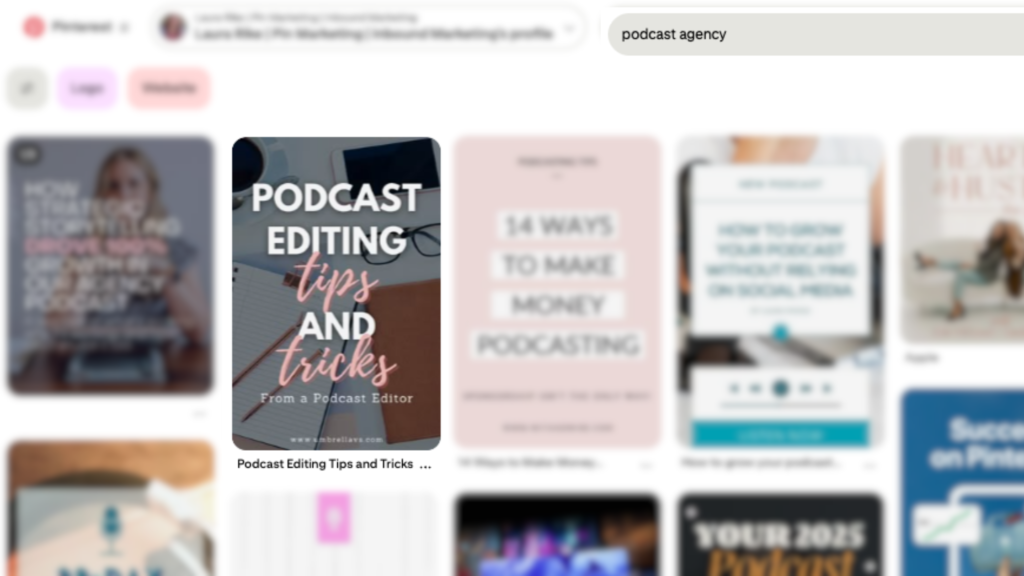
When her dream clients type these into Pinterest, Amy shows up:
- 🔍 Top 10 pins for “podcast strategy” and “podcast content”
- 🥈 The #2 pin on all of Pinterest for “podcast agency”
- 🏆 The #8 pin for “podcast editing”
Read that second one again. A brand-new account is sitting at number two for “podcast agency.” That’s not luck. That’s picking the right lane and building for search intent.
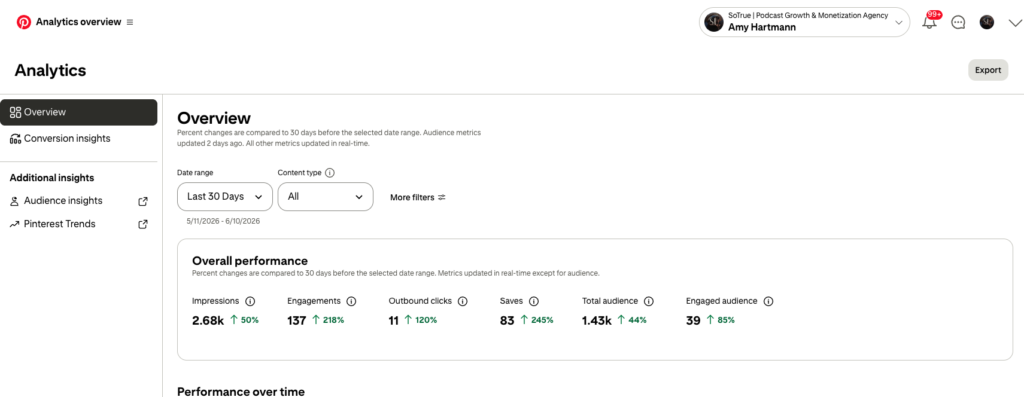
The momentum is real (last 30 days)
| Metric | Now | Change |
|---|---|---|
| Impressions | 2.68k | ▲ 50% |
| Engagements | 137 | ▲ 218% |
| Outbound clicks | 11 | ▲ 120% |
| Saves | 83 | ▲ 245% |
| Total audience | 1.43k | ▲ 44% |
| Engaged audience | 39 | ▲ 85% |
Saves up 245% matter more than they look. A save is someone bookmarking Amy for later, which is Pinterest quietly building her a warm audience while she sleeps.
The pins are turning into subscribers
This is the part that made Amy smile. Pinterest isn’t just getting her seen, it’s filling her email list through her freebie funnels:
| Freebie funnel | New subscribers from Pinterest |
|---|---|
| Titles & Hooks | 11 |
| Gilmore Girls Download | 8 |
| Substack | 8 |
| Podcash Club | 7 |
| Podcast Checklist | 3 |
| Total | 37 |
Thirty-seven new people on her list, from a channel she’d never used before, without a single burnout-inducing posting spree.
And these aren’t tire-kickers. Her email open rate is 27.76% with a 7.14% click-through rate, which tells us the Pinterest traffic is the right traffic. People who searched, found her, and actually want to hear from her.
“I came to Pinterest exhausted and honestly a little skeptical. Social media had me on a treadmill for years and I was so tired of chasing people just to keep my agency full. What I love about this is that it works while I’m doing literally anything else. I’m showing up at the top of searches my dream clients are actually typing in, my email list is growing from people who already want what I do, and I’m not glued to my phone to make it happen. It feels like the first marketing that fits the way I actually want to run my business.”
— Amy Hartmann, SoTrue Digital
What this means for you
Here’s the quiet truth underneath Amy’s story:
You don’t have a talent problem. If you’re running an agency or a service business, you’re almost certainly excellent at the work. What wears you down is the finding part, the hunting, the posting, the performing for a feed that forgets you in 48 hours.
Pinterest gives you a channel that compounds. You build it once, point it at the right searches, and it keeps sending you qualified, ready-to-buy people long after the work is done.
Amy is proof it can start fast, even from a standstill, even if social has burned you before.
When you’re ready to stop hunting and start getting found, let’s talk through what this could look like for your business, Book a 20-minute Pin Chat with me: laurarike.com/pinchat


